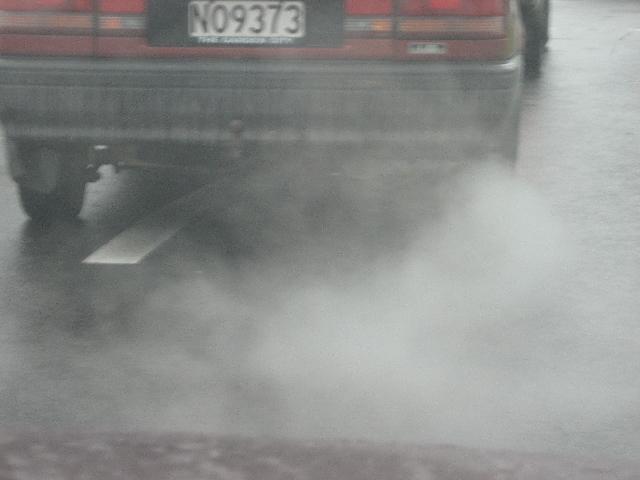
Climate is a description of long term weather patterns. Climate can change naturally but recent rapid changes in climate have been caused by people increasing greenhouse gases in the atmosphere.
Climate describes what the weather is usually like over a long period of time. Climate can change naturally but recent rapid changes in climate have been caused by people increasing greenhouse gases in the air.
What is climate change?
Climate change is the change in weather patterns that we can see on Earth over long periods e.g. hundreds to millions of years. Climate can change naturally because of changes in:
- volcanic eruptions
- ocean currents
- solar radiation
How do you think weather is different from climate?
Human induced changes
People have caused recent changes in climate by increasing the levels of greenhouse gases in the atmosphere. Greenhouse gases cause global warming by preventing heat from escaping back into space.
What evidence do scientists use to show that current climate change has been caused by people and how do we know this evidence is accurate?
What are greenhouse gases?
Greenhouse gases are those that help cause the 'greenhouse effect'. Without greenhouse gases the earth would be very, very cold (about 30° colder). Greenhouse gases include:
- water vapour
- carbon dioxide
- methane
- nitrous oxide
- ozone
What is the ‘greenhouse effect’?
The ‘greenhouse effect’ is what happens when the sun’s radiation is absorbed by greenhouse gases, and is re-radiated back towards the earth. This results in a rise of the surface temperature; A bit like in a greenhouse.
One of the greenhouse gases, carbon dioxide, has been increasing rapidly since the beginning of the industrial revolution in 1750 when humans started burning greater amounts of fossil fuels (such as coal and oil).
Before 1750 (the start of the industrial revolution) the concentration of CO2 in the atmosphere was about 270 parts per million (ppm). The concentration has increased to nearly 400 ppm in 2012. The graph below is sometimes called the Keeling Curve after Charles David Keeling who was the first person to measure this increase.
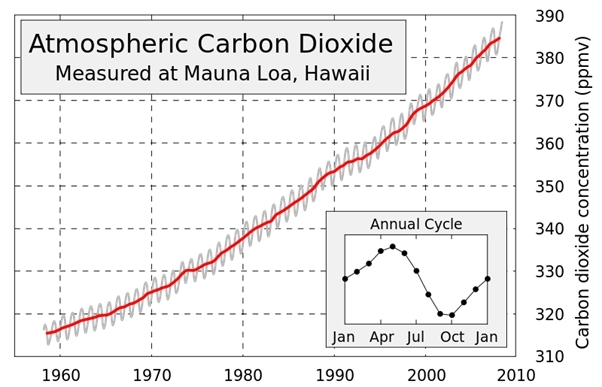
This increase in CO2 causes the man-made portion of the greenhouse effect that has caused global warming.
Why is this a useful way of displaying data about carbon dioxide concentrations and why do you think there is such a strong annual cycle?
Antarctica and climate change
In parts of Antarctica sea ice is decreasing while in other parts it is increasing.
Antarctica is a powerful heat sink that strongly affects the climate of the whole Earth because;
- It has a large ice sheet covering most of the continent which reflects heat
- Antarctica has a high elevation so cold air flows downwards from high ground
- It is located around the South Pole where less of the sun’s energy reaches the surface
- Humidity is reduced as moisture is locked up in ice sheets and sea ice
- Saltier water forms around sea ice as salts drain out of freezing sea water, this saltier water is denser (heavier) so it sinks forming cold oceanic bottom waters that spread out under the world’s oceans.
Both the ice sheet and the sea ice are likely to change if temperatures increase.
Changes in the "mass balance" of ice are of great concern to scientists because of their impact on sea level. If an ice sheet is growing, it tends to lower sea level due to the extra storage of frozen water; if it is shrinking, it tends to raise sea level.
How high above sea level do you live?
What is climate change?
Climate change is the change in weather patterns that we can see on earth over a long time for example hundreds to millions of years. Climate can change naturally because of changes in:
- volcanic eruptions
- ocean currents
- the sun
How do you think weather is different from climate?
Changes caused by people
People have caused recent changes in climate by burning oil, gas and coal and by removing forest and farming. This has caused the levels of greenhouse gases in the air to grow. Greenhouse gases cause global warming by stopping heat from escaping back into space.
Can you find out how greenhouse gases are measured?
What are greenhouse gases?
Greenhouse gases are those that help cause the ‘greenhouse effect’. The most common greenhouse gases are:
- water vapour (water in its gas form)
- carbon dioxide
- methane
What is the ‘greenhouse effect’?
The ‘greenhouse effect’ is what happens when the sun’s heat is trapped by greenhouse gases (in the way sun is trapped by glass in a glass house). This causes higher temperatures on Earth. One of the greenhouse gases, carbon dioxide, has increased very quickly since the beginning of the industrial revolution in 1750. This is when people started burning more fossil fuels (such as coal and oil). This increase in carbon dioxide can be seen on the graph below:
This increase in CO2 causes the man-made part of the greenhouse effect that has caused global warming.
Why is this a useful way of displaying data about carbon dioxide and why do you think there is such a strong annual cycle?
Antarctica and climate change
In parts of Antarctica sea ice is melting more while in other parts it is increasing.
Antarctica can store heat affecting the climate of the whole Earth because;
- It has a large ice sheet which reflects heat
- Most of Antarctica is high above sea level so cold air flows downwards from high ground
- It is a long way south so not as much of the sun’s energy reaches the surface
- There is less moisture in the air as it is locked up in ice sheets and sea ice
- Saltier water forms around sea ice as salts drain out of freezing sea water, this saltier water is heavier so it sinks forming cold water deep down in the sea that spreads out under the world’s oceans.
Both the ice sheet and the sea ice are likely to change if temperatures keep getting warmer.
Changes in the total amount of ice are of great concern to scientists because of their impact on sea level. If an ice sheet is growing, it lowers sea level as water is stored as ice; if it is shrinking, it tends to raise sea level.
How high above sea level do you live?
How do you think a change in the amount of sea ice would affect the animals that live in Antarctica?
How do you think a change in the amount of sea ice would affect the animals that live in Antarctica?